- Construction
-
DEVELOPMENT SERVICES
44,051 people live in Gainesville, where the median age is 33.1 and the average individual income is $33,476. Data provided by the U.S. Census Bureau.
Total Population
Median Age
Population Density Population Density This is the number of people per square mile in a neighborhood.
Average individual Income
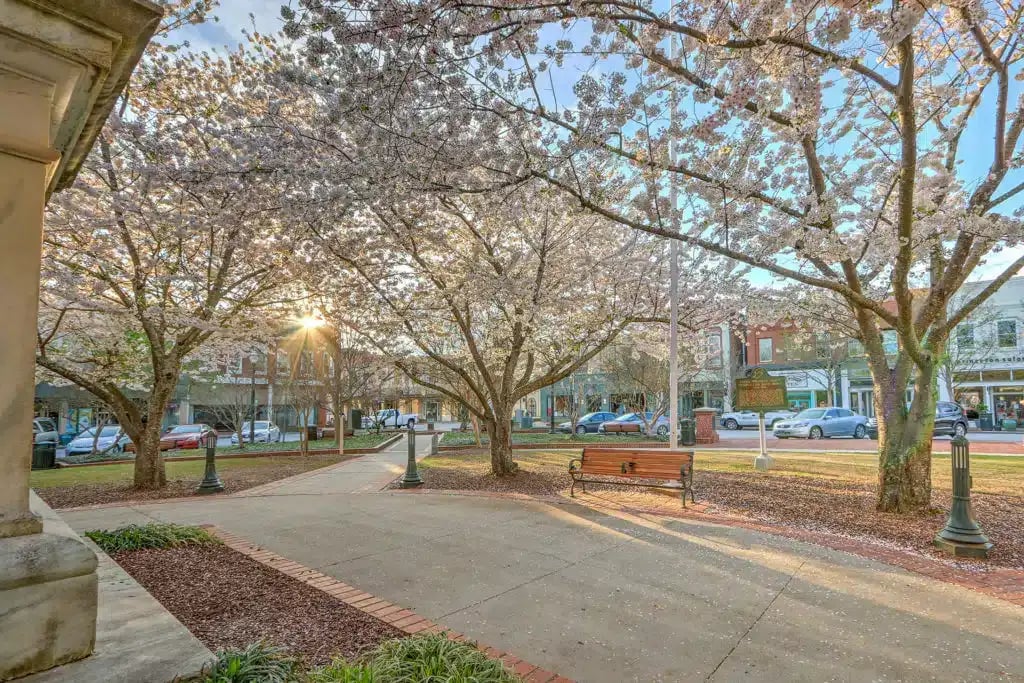
Gainesville is the economic and cultural anchor of Northeast Georgia — a lakeside city that manages to feel like three places at once. Sitting in the foothills of the Blue Ridge Mountains and wrapped around the shoreline of Lake Lanier, it offers a walkable historic downtown, luxury waterfront living, and family-friendly suburban sprawl, all within one Hall County address.
The city tends to attract a wide mix of buyers because it genuinely serves several lifestyles. Medical professionals and downtown enthusiasts gravitate toward the historic central core, boaters and luxury buyers chase the water in the Lake District, and growing families settle into the master-planned communities toward the south. What ties them together is a shared appeal: you get a self-sustaining city with real jobs, real culture, and real recreation without the daily grind of Atlanta an hour to the southwest.
Gainesville began in 1821 as a rough trading post called Mule Camp Springs, later renamed to honor General Edmund P. Gaines, a hero of the War of 1812. Its early growth was fueled by the Georgia Gold Rush in nearby Dahlonega, when the town served as a hub for miners and merchants.
By the early 20th century it had become a textile manufacturing center, but its defining economic identity came after World War II, when pioneering agricultural techniques earned it the title of the "Poultry Capital of the World" — an industry that still drives the local economy today. The city changed forever in 1956 with the completion of Buford Dam, which flooded the valley to create Lake Lanier. That single act transformed a quiet mountain-fringe town into a recreation destination, one that later hosted the rowing and canoeing events for the 1996 Atlanta Summer Olympics. Today, Gainesville blends that industrial heritage with a vibrant downtown square and a booming lakeside culture.
The Gainesville market is a healthy, balanced environment — one that gives buyers room to breathe while still holding steady value for sellers. After several years of frantic post-pandemic bidding wars, things have settled into a far more sustainable rhythm.
The pace is moderate and manageable, with median days on market landing between 45 and 60 days. Move-in-ready homes in central neighborhoods or on the water sell noticeably faster, while properties that need updates or carry premium pricing tend to linger. Competition has eased considerably from recent years: active inventory is up more than 15% year-over-year, giving buyers more choices and less pressure to waive contingencies. On average, homes are closing around 2% to 3% below original list price, leaving genuine room to negotiate.
Pricing depends heavily on where you look, and proximity to the water is the biggest single factor:
Suburban communities like Mundy Mill and Limestone anchor the entry-level and mid-tier family market, while the historic Bradford-Ridgewood district and waterfront sectors keep Gainesville's luxury and architectural diversity competitive.
Gainesville is in the middle of a gradual, healthy reset. The pandemic years brought a dramatic price surge as remote workers flocked to the North Georgia mountains and Lake Lanier, but the market has since moved away from those frantic, seller-dominated conditions into something far more balanced and durable.
Three forces define the current picture. First, inventory is rising — active listings have climbed more than 16% year-over-year, and that influx is the main driver of stabilization. Second, prices have largely plateaued: the median sale price sits around $418,000, reflecting a mild, healthy cooling of roughly 1.5% year-over-year. That's normalization, not a collapse. Third, the balance of power has shifted; with about half of current inventory sitting on the market for more than 60 days, sellers are adjusting expectations through price reductions and concessions to offset ongoing mortgage-rate pressure.
Looking ahead, Gainesville is expected to hold as a balanced market — good news for buyers who want leverage and for sellers who price realistically from the start.
Buying here today is far less stressful than it was at the market's peak, but the right strategy still depends heavily on which pocket of the city you're targeting.
The overall environment is moderately competitive. Homes sell for about 2% to 4% below original list price on average, which gives buyers real negotiating leverage. You're unlikely to land in a blind bidding war unless you're chasing a beautifully updated home in a premium spot — a prime lot on Lake Lanier or a home in the historic district. Notably, roughly 60% of recent regional transactions have included seller concessions such as closing-cost assistance or rate buy-downs, so it's worth asking for them.
Because buyers have regained leverage, fully protected offers are once again the norm. Standard 7-to-10-day due diligence periods for inspection and repair negotiation are routine, appraisal contingencies are back to standard practice, and sellers are increasingly willing to accept offers contingent on the sale of a buyer's current home — something that was virtually impossible during the boom.
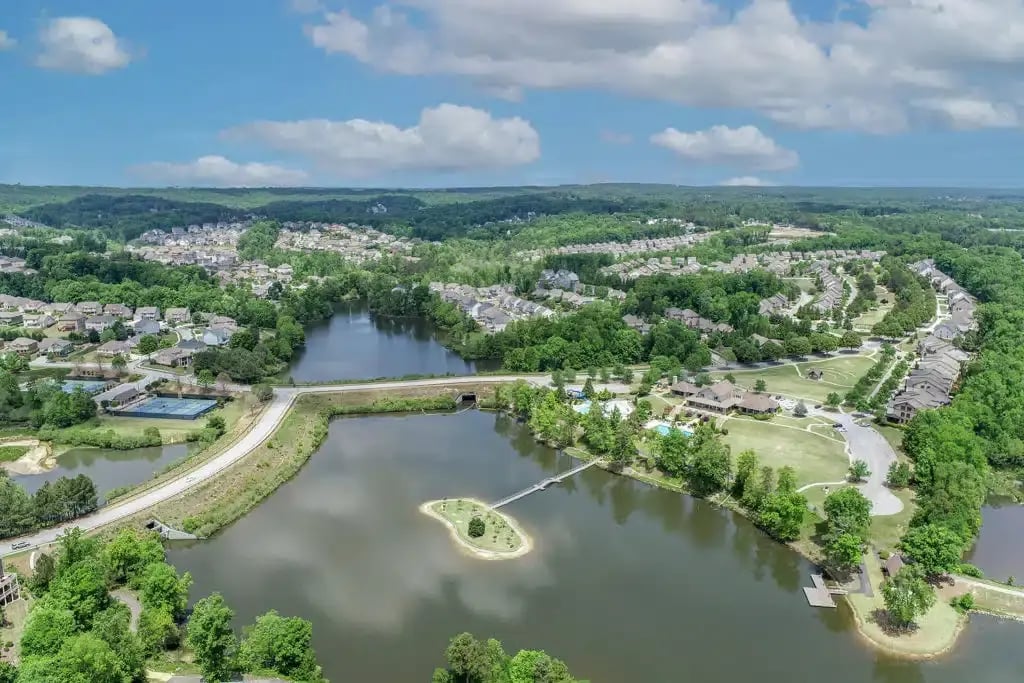
As for what you'll actually be shopping, Gainesville's architecture shifts dramatically by area. Toward the southern and eastern edges, large master-planned communities like Mundy Mill and the Limestone area offer modern three-to-five-bedroom Craftsman and Traditional builds. Near the central core and Bradford-Ridgewood, you'll find preserved mid-century ranches, historic Victorians, and Craftsman bungalows on tree-lined streets. And in the northern sections around ZIP code 30506 and the Lake District, custom lakefront estates and modern lake houses with private docks command the highest prices per square foot.
Selling in Gainesville means letting go of the hyper-speed mindset of the early 2020s. With inventory up more than 16%, buyers have choices — and they'll pass quickly on anything that misses on price or condition.
The median timeline to go under contract runs roughly 45 to 60 days, but that number hides two very different outcomes. Pristine, move-in-ready homes priced correctly from day one often find a buyer within the first two to three weeks. Meanwhile, about half of active inventory sits past 60 days, almost always because of optimistic overpricing or deferred maintenance.
Presentation is no longer optional. Because buyers are so selective, "as-is" listings get penalized with longer days on market. Professional staging, high-quality photography, and light cosmetic refreshes — neutral paint, tidy landscaping — have become baseline expectations. If a buyer sees a weekend to-do list, they'll adjust their offer downward accordingly. Sellers should also come in prepared to collaborate: with more than 60% of regional sales involving some form of concession, expect requests for closing-cost help, home warranties, or rate buy-downs, with final sale prices generally landing 2% to 4% below the original list.
Pricing is the single biggest factor in whether your home sells in three weeks or sits for three months. With prices plateauing — even dipping 1% to 2% year-over-year — the cushion for overpricing is gone.
Your comp strategy has to be hyper-local and recent. Don't anchor to what a neighbor sold for two years ago; look exclusively at settled sales from the last 60 to 90 days within a one-to-two-mile radius. Pay close attention to the sale-to-list ratio, which currently averages around 97% to 98% locally — if homes are listing at $400,000 but closing at $388,000, your baseline needs to reflect the closing table, not the wish list. And be honest about location: in a ZIP code like 30506, a home one street back from the water simply can't be compared to a direct lakefront property with a deep-water dock.
The psychology matters just as much as the math. Your list price acts as a magnet, and there's a real trap in pricing 5% to 10% above the comps hoping to cut later. In Gainesville that backfires — a high price pushes your home past the critical 21-day window when buyer enthusiasm peaks, and once a listing crosses 45 days, buyers assume something is wrong with it. The stronger play is to price dead-on or a hair below recent comparable sales. If the data says $410,000, listing at $399,000 creates a psychological "deal" for affordability-weary buyers, which is far more likely to spark competing offers and drive your final net higher than an unrealistic premium ever would.
Moving to Gainesville means trading metropolitan density for a relaxed, nature-infused lifestyle without giving up modern conveniences. As the economic hub of Northeast Georgia, the city balances a bustling, self-sustaining downtown with easy access to the Blue Ridge Mountains.
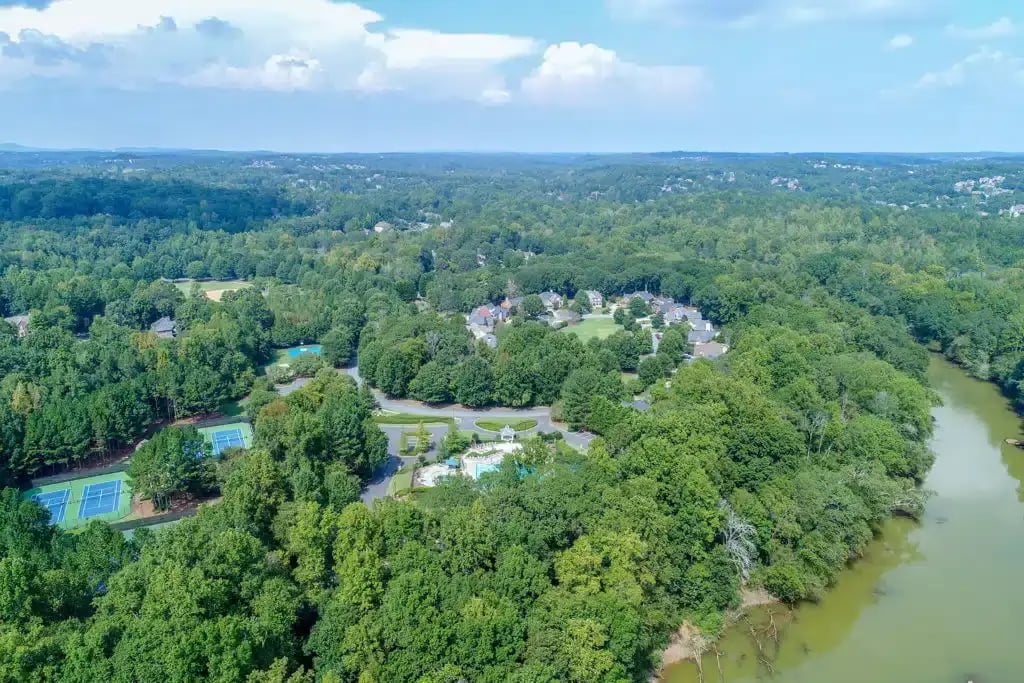
It helps to think of Gainesville as three distinct lifestyle zones. The central core and historic districts center on the walkable downtown square, with boutiques, breweries, and historic homes under mature oaks — social, cultural, and community-driven. The Lake District (ZIP 30506) stretches north and west along Lake Lanier's shoreline, where life revolves around the water, boat docks, and a permanent-vacation feel. And the southern suburban corridor, sprawling toward Flowery Branch and South Hall County along I-985, is dominated by master-planned neighborhoods, strong public schools, and major retail.
The lifestyle here rewards anyone who loves the outdoors. Summers are hot and humid — ideal for lake days — followed by a crisp autumn and mild winters with rare snowfall. Weekends mean boating on Lanier, hiking at Don Carter State Park, or a 30-minute drive north to the mountain towns of Dahlonega and Helen for wineries and fall festivals. Just as importantly, you don't have to commute to Atlanta for a career: the city's largest employers are anchored in healthcare and manufacturing, led by the Northeast Georgia Health System, along with Kubota Manufacturing and Cottrell.
Gainesville is a classic Southern city built around car ownership, but it has made real strides in localized walkability and creative transit.
Citywide, the Walk Score sits low — around 30 to 35 out of 100 — meaning a car is a practical necessity for daily errands in most areas. The clear exceptions are downtown Gainesville and the Midland area, which are genuinely walkable. Live near the historic square and you can stroll to dinner, the farmers' market, coffee shops, and Brenau University; the city has invested heavily in connecting these districts with pedestrian-friendly streetscapes.
Transit takes an unconventional but effective form here. Rather than a fixed-route bus system, Gainesville runs WeGo Rideshare through Hall Area Transit — an app-based, on-demand service using shared 12-passenger vans that provides affordable point-to-point rides across the city and county. On weekends, the free, color-coded Gainesville Trolley connects downtown to neighborhoods like Dixon, Glenwood, Riverside, and Midland on Friday and Saturday evenings. For regional travel, an active Amtrak station offers passenger rail up the East Coast.
On commuting, Gainesville sits about 50 miles northeast of downtown Atlanta via I-985 into I-85. A daily drive into the heart of Atlanta is grueling — often 1.5 to 2 hours each way at rush hour — so working locally or on a hybrid schedule is strongly advised. Closer north-metro hubs like Alpharetta, Johns Creek, and Gwinnett County are far more manageable at 40 to 60 minutes. Cyclists will find excellent recreational trails around Lake Lanier and local parks, though the road network isn't built for everyday bike commuting.
For family buyers, understanding Gainesville's schools starts with one key distinction: the area splits between Gainesville City Schools, the independent municipal district, and Hall County Schools, the surrounding county district — with certain outer pockets crossing into premier neighboring systems.
Hall County Schools generally offer some of the highest-rated traditional public options in the immediate area, especially for STEM and college-prep tracks. Cherokee Bluff High School (B+ rated), on the city's southern edge, is one of the most sought-after public high schools in the region, known for strong academics, excellent facilities, and a dominant athletics program. Families near the northern lake areas or the eastern boundary will find North Hall and East Forsyth High Schools highly rated, and the World Language Academy is a well-regarded public charter offering dual-language immersion.
Gainesville City Schools serve the central core and historic districts. Gainesville High School (B rated) — known locally as "Big Red" — carries a passionate alumni network, standout athletics, and an extensive AP catalog, with campus facilities recently upgraded through local ESPLOST funding. At the elementary level, the city uses a popular academy model that lets parents choose specialized focus tracks, such as the Mundy Mill Arts Academy or the Enota Multiple Intelligences Academy.
One insider tip worth knowing: the westernmost edge of Gainesville — particularly properties along the western banks of Lake Lanier — actually sits inside Forsyth County. Homes in that pocket are zoned for the Forsyth County School District, routinely ranked among the top-performing public districts in the entire state, which makes a "Gainesville" mailing address quietly valuable for education-focused buyers.
Outdoor recreation is arguably Gainesville's strongest selling point. Lake Lanier dominates local life, but the city backs it up with an exceptionally well-maintained network of parks and trails built for active living.
The standout is the Atlanta Botanical Garden, Gainesville — a 168-acre northern campus of the famous Atlanta attraction, featuring a large outdoor amphitheater, woodland walking trails, and spectacular seasonal displays. Closer to the center, Wilshire Trails Park is a local favorite with paved and natural trails, a bubbling creek, boardwalks, and generous playgrounds under dense tree cover. On the quieter northern shore of Lanier, Don Carter State Park offers white-sand swimming beaches, boat ramps, wooded hiking trails, and camping. And Longwood Park, sitting right on the water near downtown, anchors family life with fishing piers, tennis courts, and playgrounds — plus direct access to the Rock Creek Greenway, a paved trail system that links the lake back to the historic square.
Gainesville's food and nightlife scene is a genuine lifestyle signal — proof you don't need to drive to Atlanta for an elevated night out. The center of gravity is the Downtown Dining District, a designated open-container zone where you can sip a craft cocktail while strolling the brick-paved historic square.
The culinary vibe bridges classic Southern comfort with modern, chef-driven concepts, running from upscale steakhouses and contemporary taco lounges to gourmet tapas bars and sidewalk cafés, with a clear preference for independent spots over chains. The nightlife is sophisticated rather than rowdy — think craft breweries, rooftop bars, and intimate taprooms that come alive on weekends with trivia nights, run clubs, and outdoor fire pits. Anchoring the scene is Bourbon Brothers Smokehouse & Tavern alongside The Hall, a state-of-the-art live music and dining complex just off the square that draws premium bourbon tastings, late-night crowds, and touring country and rock acts.
For a city its size, Gainesville punches well above its weight culturally — it's the undisputed arts capital of Northeast Georgia. The heart of it is the Arts Council Smithgall Arts Center, housed in a beautifully restored 1914 railroad depot downtown, with rotating fine-art galleries, intimate indoor spaces, and a 6,300-square-foot outdoor pavilion whose lawn hosts summer concert series featuring nationally touring acts.
The presence of Brenau University adds a steady stream of collegiate-level theater, dance, and opera, keeping the local calendar full of stage productions and classical recitals at the Brenau Downtown Center and the university's historic auditoriums. The city also champions public art through its murals and the annual Art Walk, which turns the square into an open-air gallery, while seasonal traditions like the Blue Sky Concert Series and Christmas on Green Street weave culture into everyday civic life.
What is the average price of homes for sale in Gainesville, Georgia?
As of mid-2026, the local real estate market remains steady with a median listing price typically ranging between $380,000 and $500,000, depending on property type and proximity to the water. Single-family homes in master-planned subdivisions or residential neighborhoods like Mundy Mill hover around $400,000 to $430,000. In contrast, lakefront properties on Lake Lanier and larger historic homes push median prices significantly higher, often well into the $500,000 to $900,000+ range.
How does living near Lake Lanier impact property values and regulations?
Homes situated along or near Lake Lanier command a strong premium due to water access, recreational appeal, and scenic views. However, owning a waterfront or lake-adjacent property comes with specific regulatory considerations managed by the U.S. Army Corps of Engineers, which owns and manages the shoreline. Buyers must verify dock permits, shoreline vegetation rules, and setback requirements before purchasing, as dock rights do not automatically transfer or permit expansion without Corps approval.
Is Gainesville a buyer's or seller's market right now?
The Gainesville market currently operates as a relatively balanced market, providing moderate conditions for both buyers and sellers. Inventory levels sit at roughly 1,000 to 1,100 active listings, giving buyers reasonable choices and room for price negotiation (with homes selling near or slightly below list price). Average time on market hovers around 50 to 55 days, signaling steady, measured transaction activity rather than the hyper-competitive bidding wars seen in previous years.
What are the top neighborhoods and housing styles in Gainesville?
Gainesville features a wide mix of architectural styles and community settings, ranging from Craftsman bungalows and mid-century ranches near downtown to modern multi-story developments in suburban subdivisions. Popular areas include Mundy Mill for master-planned amenities, Bradford-Ridgewood and City Park for established neighborhoods with character, the Green Street Historic District for historic homes, and the Lake District for waterfront living.
What are the local property tax expectations and school district options?
Gainesville sits inside Hall County, where property taxes are generally lower than those in closer-in Atlanta suburbs like Gwinnett or Fulton counties. Buyers can choose between two primary public school systems depending on the address: Gainesville City Schools (serving residents within city limits) and the broader Hall County School District. Both districts offer specialized magnet programs, career academies, and strong athletic offerings, alongside private options like Riverside Prep and Brenau Academy.
What rules apply if I purchase a home in a historic district?
If you purchase a property within locally designated areas—such as the Green Street or Ridgewood historic districts—exterior renovations are governed by local historic preservation guidelines. Major changes to siding, windows, porches, or structural additions require a Certificate of Appropriateness from the city's Historic Preservation Commission before work can begin. It is important to distinguish between local historic designation (which carries building restrictions) and National Register listing alone (which is primarily symbolic and does not restrict private alterations).
Understanding Gainesville on paper is one thing — knowing which street sits in Forsyth County, how a lakefront lot comps against one a block back, or when a listing is priced to sell versus priced to sit is where local experience becomes invaluable. That's where Candler Real Estate comes in. The team knows North Georgia because they live and work here, bringing decades of combined experience across residential, commercial, land, and investment sales throughout Gainesville, Hall County, and the surrounding region. Whether you're relocating from out of state, buying your first home, or preparing to sell, they focus on building lasting relationships and guiding clients through even the most complex transactions with clarity and confidence. If you're ready to make a move in Gainesville, reach out to the Candler Real Estate team at candler.com/contact to start the conversation.
Gainesville has 15,474 households, with an average household size of 2.74. Data provided by the U.S. Census Bureau. Here’s what the people living in Gainesville do for work — and how long it takes them to get there. Data provided by the U.S. Census Bureau. 44,051 people call Gainesville home. The population density is 1,318 and the largest age group is Data provided by the U.S. Census Bureau.
Total Population
Population Density Population Density This is the number of people per square mile in a neighborhood.
Median Age
Men vs Women
Population by Age Group
0-9 Years
10-17 Years
18-24 Years
25-64 Years
65-74 Years
75+ Years
Education Level
Total Households
Average Household Size
Average individual Income
Households with Children
With Children:
Without Children:
Marital Status
Blue vs White Collar Workers
Blue Collar:
White Collar:
There's plenty to do around Gainesville, including shopping, dining, nightlife, parks, and more. Data provided by Walk Score and Yelp.
Explore popular things to do in the area, including Cook Out, El Taco Veloz, and J & J Foods.
| Name | Category | Distance | Reviews |
Ratings by
Yelp
|
|---|---|---|---|---|
| Dining · $ | 0.14 miles | 65 reviews | 3.1/5 stars | |
| Dining · $ | 0.17 miles | 46 reviews | 2.8/5 stars | |
| Dining · $ | 0.24 miles | 4 reviews | 2.8/5 stars | |
| Dining | 0.25 miles | 0 reviews | 0/5 stars | |
| Dining | 0.33 miles | 8 reviews | 1.8/5 stars | |
| Dining | 0.33 miles | 5 reviews | 3.8/5 stars | |
| Dining | 0.39 miles | 0 reviews | 0/5 stars | |
| Dining | 0.39 miles | 0 reviews | 0/5 stars | |
| Dining · $ | 0.4 miles | 37 reviews | 4.8/5 stars | |
| Dining | 0.4 miles | 0 reviews | 0/5 stars | |
| Dining | 0.4 miles | 0 reviews | 0/5 stars | |
| Dining · $ | 0.44 miles | 61 reviews | 3/5 stars | |
| Dining | 0.45 miles | 0 reviews | 0/5 stars | |
| Dining | 0.45 miles | 1 review | 3/5 stars | |
| Shopping | 0.45 miles | 0 reviews | 0/5 stars | |
| Shopping | 0.49 miles | 1 review | 1/5 stars | |
| Active | 0.29 miles | 0 reviews | 0/5 stars | |
| Active | 0.33 miles | 0 reviews | 0/5 stars | |
| Active | 0.51 miles | 0 reviews | 0/5 stars | |
| Active | 0.51 miles | 0 reviews | 0/5 stars | |
| Nightlife | 0.5 miles | 0 reviews | 0/5 stars | |
| Beauty | 0.14 miles | 0 reviews | 0/5 stars | |
| Beauty | 0.55 miles | 0 reviews | 0/5 stars | |
| Beauty | 0.55 miles | 0 reviews | 0/5 stars | |
|
|
||||
|
|
||||
|
|
||||
|
|
||||
|
|
||||
|
|